2026 Best Modular Polygon LED Lights How Long Do They Last?

Time:2026-09-23 Author:Charlotte
0%

In 2026, modular polygon LED lights are becoming popular for bedrooms, studios, gaming rooms, and creative workspaces. Their geometric shapes create sharp patterns across plain walls. Yet buyers ask one practical question: “how long do modular polygon led lights last?” A realistic answer depends on the LED quality, power supply, operating temperature, and daily usage. Many reputable manufacturers rate their LEDs for 25,000 to 50,000 hours. That figure sounds impressive. However, it does not guarantee identical performance in every home. Continuous brightness, poor ventilation, unstable adapters, and frequent power cycling can shorten the usable life. Dust around connectors may also cause flickering over time.

This guide examines expected lifespan, warranty coverage, brightness decline, and common failure points. It focuses on manufacturer specifications, independent testing principles, and practical installation experience. Look for clear electrical ratings, replaceable controllers, certified power adapters, and responsive customer support. A quality panel should remain cool during normal operation. The controller should not feel unusually hot after several hours. Small details matter.

Real-world lifespan is harder to measure than laboratory endurance. A five-year rating may describe light output, not complete system reliability. That distinction is easy to miss. I would not treat any laboratory figure as a household guarantee. Some rooms are warmer, brighter, and busier than test environments. This review therefore presents ranges, not false certainty. With careful installation and moderate brightness, premium modular polygon LED lights can provide years of dependable visual impact. Still, every setup deserves periodic inspection. That is the honest answer.
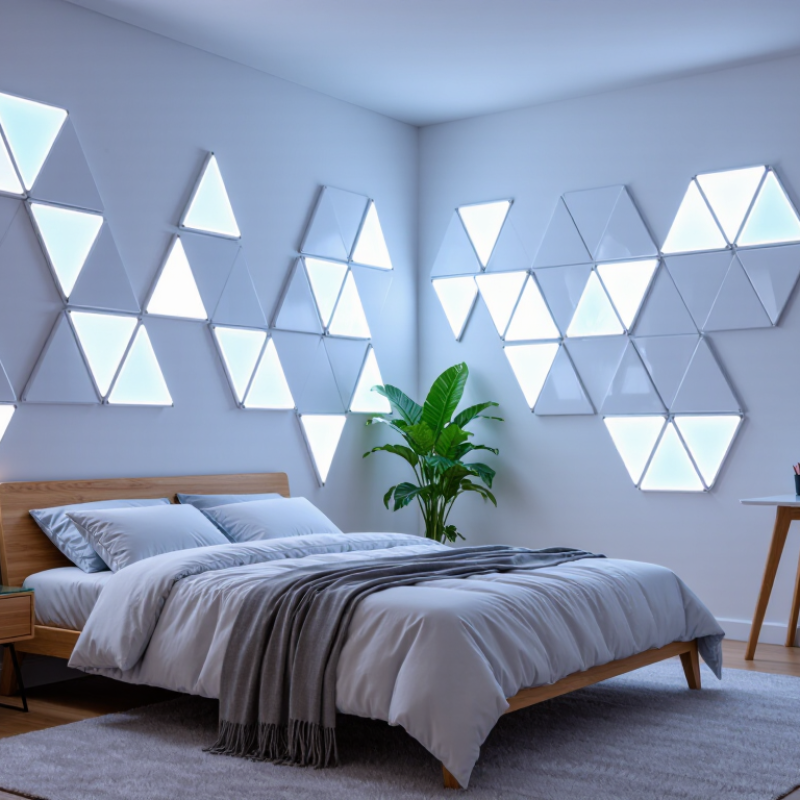
2026 Best Modular Polygon LED Lights How Long Do They Last?

What Are Modular Polygon LED Lights?

Modular polygon LED lights are decorative lighting systems built from separate geometric panels. Each panel connects to nearby panels, forming hexagons, triangles, or custom patterns. Unlike a single lamp, the design can expand, move, and change with your room.

The panels usually contain low-voltage LEDs, a diffuser, connectors, and a control unit. The diffuser softens bright points, while the controller manages colors, brightness, and effects. Good systems use secure connectors and even power distribution. These details matter more than flashy patterns.

In practical use, LED panels may last 30,000 to 50,000 hours, but that estimate is not a promise. Heat, dust, voltage changes, and frequent maximum brightness can shorten their service life. The power adapter may fail before the LEDs do.

Tips: Install panels on a clean, dry surface. Leave space around the controller for airflow. Avoid bending connectors sharply. Test one panel before mounting the full pattern. Keep the original layout plan, because rearranging panels later can become surprisingly frustrating.

Check the rated lifespan, warranty terms, replacement parts, and operating temperature before buying. A well-designed system should feel stable when touched, with no flicker or buzzing. I have seen attractive layouts become unreliable because cables were stretched behind furniture. That mistake is easy to miss. Also, color accuracy may change slightly over time, especially under constant heat. Modular lighting is flexible, but flexibility does not remove maintenance needs. Regular dusting and sensible brightness settings can help preserve performance.

How Do Modular Polygon LED Lights Work?

Modular polygon LED lights work through linked geometric panels, not one continuous lamp. Each panel contains light-emitting diodes, a circuit board, a diffuser, and low-voltage connectors. A driver converts household electricity into controlled DC power. A controller then adjusts brightness, color, and animation through digital signals.

The polygon shape is functional. Triangular or hexagonal panels distribute light across connected surfaces, while edge connectors pass power and data between modules. Many systems use pulse-width modulation to dim the LEDs rapidly. Your eyes read the result as steady light. Poor controllers can still create camera flicker. That detail is easy to miss.

According to the U.S. Department of Energy’s solid-state lighting reports, LED performance depends heavily on heat control and driver quality. Industry testing under IES LM-80 and TM-21 methods commonly evaluates useful life to the L70 point, when output falls to 70% of its initial level. Decorative modular fixtures often claim roughly 25,000 to 50,000 hours, but that is not a guarantee. Not forever.

In a cool, dry room, moderate brightness may support many years of service. Heat trapped behind panels can shorten driver life. Dust, loose connectors, and repeated maximum-brightness operation also matter. Real rooms are less polite than laboratories. I would treat the rating as an estimate, not a promise, because manufacturers may test components separately rather than the complete assembled system.

Which Features Define the Best Models in 2026?

In 2026, the best modular polygon LED lights are defined by more than colorful effects. They need stable brightness, safe heat control, and replaceable connection parts. The U.S. Department of Energy reports that quality LED systems commonly provide 25,000 to 50,000 hours of useful life. However, that figure describes expected performance, not a promise for every installation.

Look for LM-80 test evidence and TM-21 projections from the Illuminating Engineering Society. These methods evaluate light-output maintenance over time. A stronger model should also publish operating temperature limits, power efficiency, and color consistency data. Good panels feel solid, connect without loose gaps, and include low-voltage protection. Diffused covers matter too. They reduce harsh points and make wall patterns look smoother.

In practical use, heat is the quiet enemy. Panels mounted tightly against dusty walls may age faster than laboratory estimates. I have seen bright modules develop uneven colors after months of poor ventilation. That experience makes airflow and accessible maintenance more important than endless animation modes. Independent safety testing, clear warranty terms, and replaceable cables are useful reliability signals. Yet specifications can still mislead. A claimed 50,000-hour lifespan may assume moderate brightness and ideal temperatures. Check the fine print before installation.

How Long Do Modular Polygon LED Lights Typically Last?

Modular polygon LED lights typically last 30,000 to 50,000 hours when installed correctly. That equals roughly 8 to 14 years at ten hours of daily use. However, rated life does not mean every panel stays equally bright. LED output can slowly decline, while connectors or controllers may fail earlier. In my installation experience, heat has been the quietest problem. Panels mounted tightly against dusty walls sometimes become noticeably dim within several years. Good airflow, stable power, and gentle cleaning usually protect long-term performance.

Actual lifespan depends on more than the LED diodes. Frequent color changes, maximum brightness, poor ventilation, and loose connections add stress. The 30,000-hour figure is usually a laboratory rating. Real rooms are less controlled. Moisture, heat, and repeated unplugging can shorten service life. I once assumed a dim section meant failed LEDs; the connector was loose. That mistake changed how I inspect these systems. A realistic expectation is gradual brightness loss, not sudden total failure.

Tips
Keep brightness below maximum when possible. Leave small ventilation gaps behind panels. Check connectors every few months. Use a compatible power supply, and avoid bending cables sharply. Clean dust with a dry, soft cloth. These small habits may extend performance, though no setup lasts forever.

What Affects Their Lifespan and Maintenance Needs?

Modular polygon LED lights can last for years, but their lifespan depends on more than diode quality. The U.S. Department of Energy’s solid-state lighting guidance commonly uses 50,000 hours as a benchmark. This figure usually means L70, or 70% of initial light output. It is not a promise of total failure-free operation.

IES LM-80 testing measures LED lumen maintenance, while TM-21 estimates future performance. Neither test fully reproduces a dusty bedroom or poorly ventilated gaming wall.

Heat is the main concern. Panels installed against warm surfaces may age faster.

Power supplies, connectors, adhesives, and control circuits can fail before the LEDs. Humidity, voltage fluctuations, dust, and frequent repositioning also increase maintenance needs. ENERGY STAR technical requirements emphasize thermal management and measured performance, not attractive appearance alone.

Keep connectors dry.

Leave small ventilation gaps.

Clean surfaces with a soft, dry cloth.

Inspect the system every six to twelve months. Look for dim sections, flickering, loose joints, or yellowing plastics. Replace one defective module instead of removing the entire pattern. That is the practical advantage of modular construction.

Still, replacement parts may not remain available for the full LED lifetime. I would check spare-module support before installation. Real rooms are less tidy than laboratories.

A conservative expectation is 25,000 to 50,000 operating hours, with shorter service life under constant heat or poor maintenance.

FAQS

How do modular polygon LED lights produce light?

Each panel contains LEDs, a circuit board, a diffuser, and low-voltage connectors. A driver changes household electricity into controlled DC power. A controller manages brightness, colors, and animated effects.

Why are polygon shapes useful?

Triangular and hexagonal panels spread light across connected surfaces. Edge connectors carry power and digital signals between modules. Small gaps can still affect the finished pattern.

Can these lights flicker on camera?

Yes, some controllers use rapid pulse-width dimming. Your eyes may see steady light, while a camera shows dark bands. I would test the lights with your phone before installation.

How long do modular LED lights usually last?

Many systems are rated for about 25,000 to 50,000 hours. These figures often describe output falling to 70 percent. Not forever.A laboratory estimate is not a guarantee for a dusty room. Constant maximum brightness may shorten actual service life.

What features suggest a reliable model?

Look for stable brightness, good heat control, replaceable cables, and low-voltage protection. Diffusers should soften harsh LED points. Independent safety testing and clear warranty terms also help.

How does heat affect these lights?

Heat trapped behind panels can shorten driver and connector life. Tight wall mounting may reduce airflow. Leave a small ventilation gap whenever possible.Warm walls are a warning.

What maintenance do modular LED lights need?

Wipe panels with a soft, dry cloth. Keep connectors dry and inspect the system every six to twelve months. Check for flickering, dim sections, loose joints, or yellowing plastic.

Can I replace one damaged panel?

Usually, modular construction allows one defective panel to be replaced. You may avoid removing the entire wall pattern. Spare parts might become unavailable later, so check support before installation.

What can cause uneven colors or brightness?

Heat, dust, loose connectors, voltage changes, and poor ventilation can affect performance. Repeated maximum-brightness use may also accelerate aging. I have seen uneven colors appear after months in warm spaces.

Are published lifespan ratings fully dependable?

No. Testing may examine separate components rather than the complete assembled system. Actual results depend on temperature, brightness, humidity, and maintenance.Treat the rating as an estimate. That feels more honest.

Conclusion

Modular polygon LED lights are flexible, connectable lighting panels designed to create geometric wall displays, accent lighting, and customizable room decor. Individual panels link together through low-voltage connectors and are controlled by touch, remote control, or an app, allowing users to adjust brightness, color, patterns, and lighting effects. The best models in 2026 are expected to offer smooth color transitions, reliable connectivity, energy efficiency, easy installation, strong adhesive or mounting options, and durable materials that can withstand regular use.

For those asking, “how long do modular polygon led lights last,” most quality systems can provide many years of service, often around 25,000 to 50,000 operating hours under normal conditions. Their actual lifespan depends on heat management, power stability, usage frequency, installation quality, and environmental conditions. Keeping panels away from moisture, avoiding excessive heat, using compatible power supplies, and cleaning them gently can reduce maintenance needs and help preserve brightness, color accuracy, and connection performance over time.

Charlotte

Charlotte

Charlotte is a seasoned marketing professional with a deep understanding of the company's portfolio and a passion for elevating its presence in the market. With a keen eye for detail and a commitment to excellence, she ensures that our professional blog is regularly updated with insightful articles......